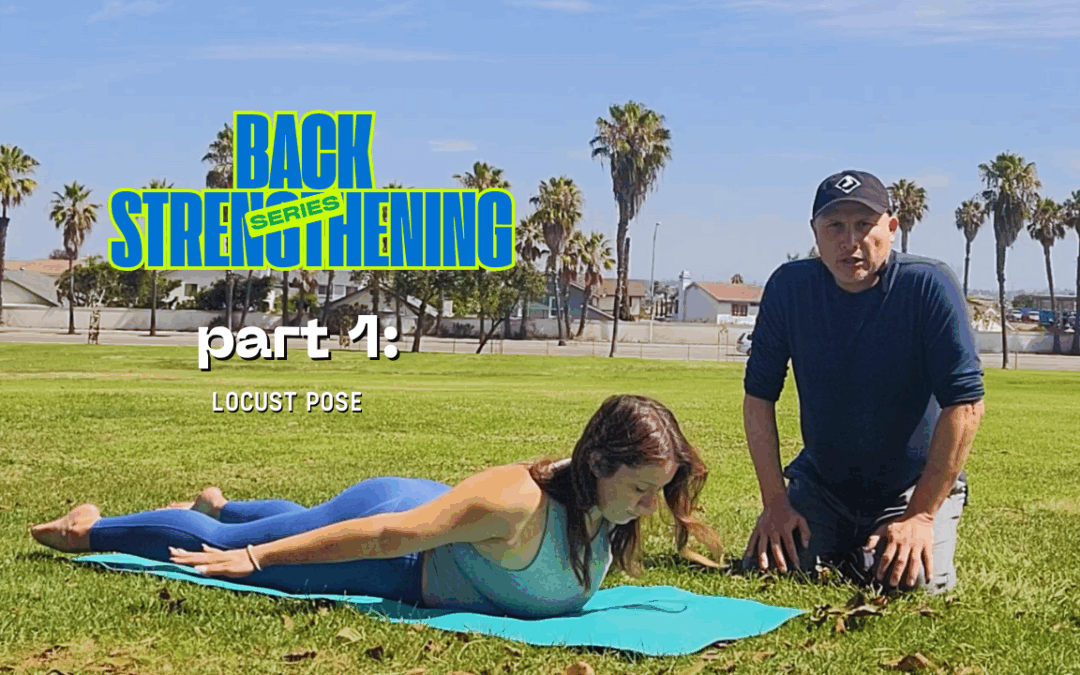
Looking to Counteract the Effects of Prolonged Sitting?
Then this 3-part Back Strengthener Series is just for you. Part One focuses on Locust Pose (Salabhasana). Click on the photo above to view the tutorial.
For my money, Salabhasana is one of the best poses for office workers or others who sit for hours. For strengthening and toning the posterior chain, this pose offers us more than the glamorous pose, Upward-Facing Dog (Urdhva Mukha Svanasana).
Why is this the case? Let’s give a quick breakdown of the poses. Remember, both poses have their benefits. The goal is to understand your focus with a pose. What are you aiming to work on? Building strength in your posterior chain or in the arms, shoulders?
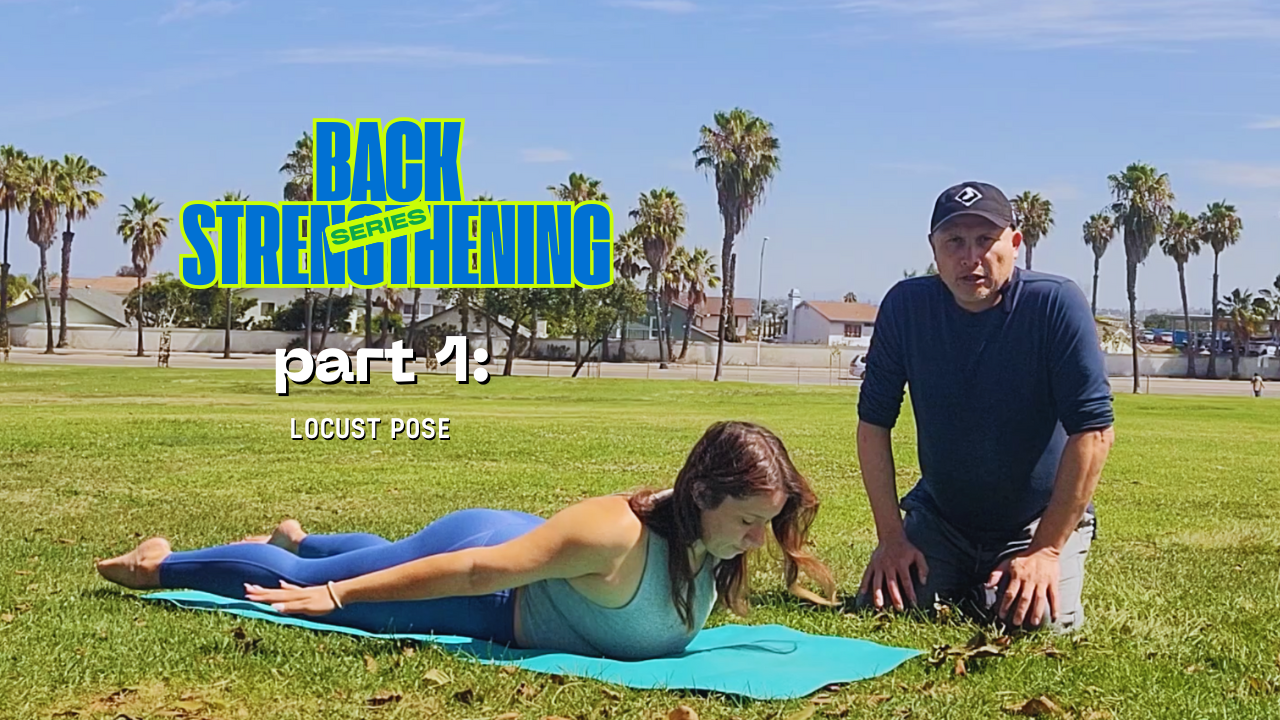
Locust pose (Salabhasana)
The pose is particularly effective for strengthening the back, glutes, and hamstrings while stretching the front of the body and opening the chest and shoulders. It’s a great option for beginners due to its accessibility and emphasis on building posterior chain strength.
Since you’re not using your hands to leverage the backbend, Locust pose encourages you to use you back muscles, glutes, and hamstrings to initiate and sustain the action.
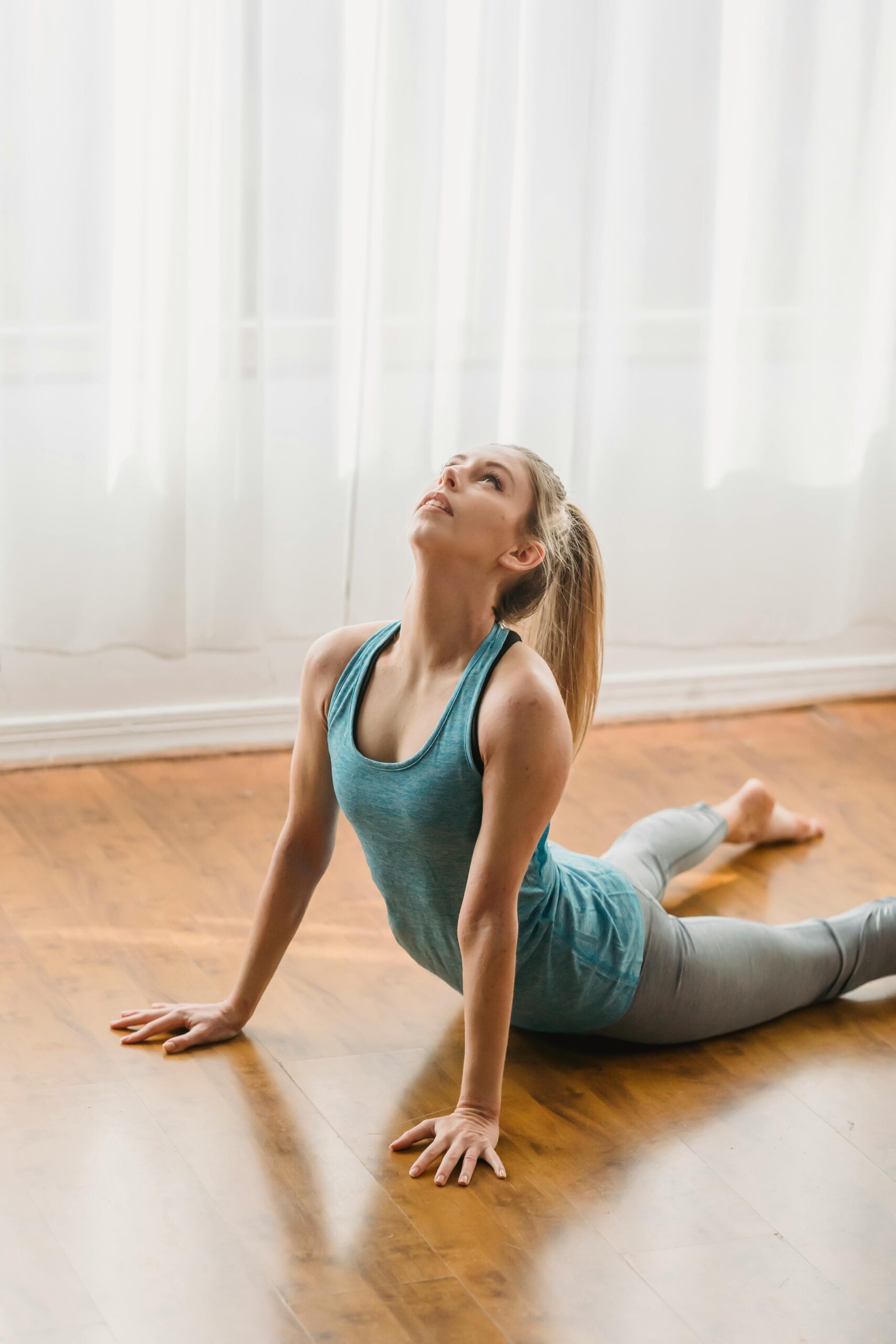
Upward -Facing Dog
While also a backbend, primarily focuses on strengthening the arms, wrists, and shoulders, and stretching the abdomen.
Because you’re using your hands to leverage the backbend, much of the bendbend work is offloaded to the hands. Nothing wrong with that, but not as effective if your goal is strengthening your posterior chain.
This pose is often done as a transition pose. It typically follows Chaturanga Dandasana (Yoga “push up”) and precedes Adho Mukha Svanasana (downward-facing dog). For this reason, many yogis struggle to execute it correctly, often leading to lower back pain or strain. Common mistakes include collapsing the shoulders, letting the thighs rest on the mat, and overarching the lower back.
Another big issue is many yogis drop their head too far back, which can lead to neck compression. This is never a good thing. See image above. Don’t do that. Instead, look straight ahead.
Locust Pose Important Considerations:
- Warm-up: Always warm up your body before practicing any yoga pose, especially backbends.
- Listen to your body: If you experience any pain or discomfort, ease out of the pose or try a modification.
- Don’t overarch: Focus on lengthening the spine and distributing the backbend evenly throughout the upper, middle, and lower back, rather than just bending the lower back.
- Engage the core: Maintaining core engagement helps support the spine and prevent strain.
- Breathe steadily: Avoid holding your breath during the pose; deep, conscious breathing helps relax the muscles and improves oxygen flow.
Precautions Related To Shalabhasana Or Locust Pose?
- Shalabhasana should not be performed by people with sciatica, slipped discs, back injuries, or acute back discomfort.
- Pregnant women shouldn’t perform shalabhasana.
- The practice of shalabhasana steps is not advised for those with high blood pressure or asthma.